


5 Minutes
In this article we answer the following questions:
- What are the signs of stress in children by age group?
- What natural remedies help children cope with stress and trauma?
- How does the Holmes and Rahe Youth Stress Scale measure risk of illness in children?
- What causes stress and trauma in children today?
- How can Bio-Strath and homeopathy support a stressed child?
Childhood has changed dramatically in recent years, and the pressures our children carry have changed with it. Anxiety in children has climbed by roughly 20% over the past decade, a statistic that should give every parent pause. From academic demands to social media overload, today’s children are navigating a world their parents never experienced, and their little nervous systems are feeling the weight of it.
Where does the pressure come from?
Stress in children builds from multiple directions at once. School pressures, including academic performance, social dynamics, and bullying, are the biggest contributors, alongside the constant social pressures children face to fit in and be accepted. Information overload from screens and devices, teenage heartbreak, and the weight of adult expectations from parents, teachers, or coaches add strain. Family stress, including changes within the household, illness, or shifts in the living environment, also plays a large role in a child’s well-being.
To help understand just how much these events affect the youth, health professionals often refer to the Holmes and Rahe Youth Stress Scale, which ranks life events according to their likelihood of causing illness over the following twelve months. The death of a parent, for example, scores 100 points, and the divorce of parents scores 90. Everyday pressures like failing a grade (56 points), being suspended (50 points), or beginning to date (51 points) are also included.
A total score above 300 signals a high risk of causing illness, 150 to 299 indicates moderate risk, and anything below 150 is considered a lower risk. In children, stress shows up as recurrent headaches, stomach aches, disrupted sleep and eating patterns, and lowered immune resilience that leaves them more prone to falling ill.
Recognising the signs by age
Children express distress differently depending on their stage of development. Knowing what to look for makes early intervention possible.
| Infants 0-3 yrs (indirect/vague) |
|
| . | . |
| 3-6 years (listen to words) Worried Confused Angry |
|
| . | . |
| 7-12 years |
|
| . | . |
| 13 – 17 years |
|
| . | . |
| Other (all ages) |
|
| . | . |
Supporting your stressed child naturally
There is real hope for families navigating a child’s stress because early, gentle intervention can make all the difference, and professional support is always there if needed. Before turning to pharmaceutical options, there is so much you can do naturally to nurture your child’s emotional resilience.
Consistency and routine offer children a comforting sense of predictability. A dedicated quiet space and balanced screen time help settle an overstimulated mind. Movement is medicine for little bodies. Play, walks or bike rides are some of nature’s best stress relievers. . Calming breathing exercises paired with a comforting breathing buddy toy, a soft stuffed animal placed on a child’s tummy so they can watch it rise and fall as they breathe, can soothe an anxious nervous system in minutes by giving them a simple, visual focus point.
Emotional expression is just as important as physical release. Clay, paint, crayons, drawing, or journalling give children a safe outlet for feelings they can’t always put into words, and mindful or play-based therapy offers the same gentle healing. A worry doll, a small, soft toy a child confides their worries to before placing it under their pillow at night, can help little ones name and let go of big emotions. A feeling chart, a visual chart showing different facial expressions or colours linked to emotions, gives children an easy way to point out how they’re feeling when words are hard to find. Gently guiding them to recognise and question anxious thoughts helps to build lasting inner strength. Never underestimate nourishment; a child’s growing brain is remarkably hungry. Feeding it well gives them a stronger foundation to cope with life’s pressures.
You don’t have to do this alone
Reaching out for professional help early, whether to a psychologist, play therapist, or counsellor, gives your child the best chance to work through difficult experiences. Many parents feel they should manage everything alone, but leaning on teachers, healthcare professionals, and other trusted adults makes the circle of care around your child stronger.
If you’re unsure about supporting a struggling child, know that getting help isn’t a sign of failure, it’s a sign of love. You aren’t alone in this journey. The right support can help both your child and your whole family find their footing again.
Natural remedies for stress and trauma
Homeopathy is a gentle, safe, non-habit-forming, and side-effect-free approach to supporting children through stress, making it suitable for children of every age. Homeopathy has a profound ability to address trauma, even historical events that continue to affect a child’s emotional well-being long after they occurred. Remedies are carefully matched to a child’s specific emotional state. For more advanced cases, deeper acting remedies are available through a Registered Homeopath via the Homeopathic Association of South Africa.
Irma’s Rescue Range
Irma’s is a South African range of six affordable emotional health remedies, combining gentle homeopathic medicines and flower essences to offer relief during life’s toughest moments. The range is non-addictive and non-drowsy, suitable for children over two years old, and can be used alongside conventional therapy for extra support.
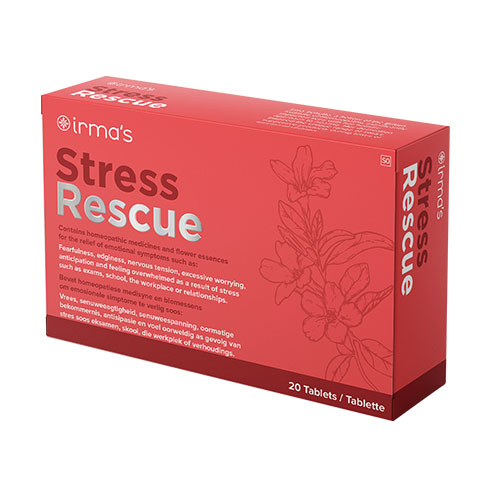 |
Irma’s Stress Rescue: eases fearfulness, edginess, nervous tension, excessive worrying, and feeling overwhelmed, helpful for children facing exam pressure, school stress, or relationship difficulties. |
| . | . |
 |
Irma’s Panic Rescue: calms sudden fear, terror, anxiety, and a sense of losing control, along with physical symptoms like a racing heart or uneasy breathing that often accompany a child’s panic. |
| . | . |
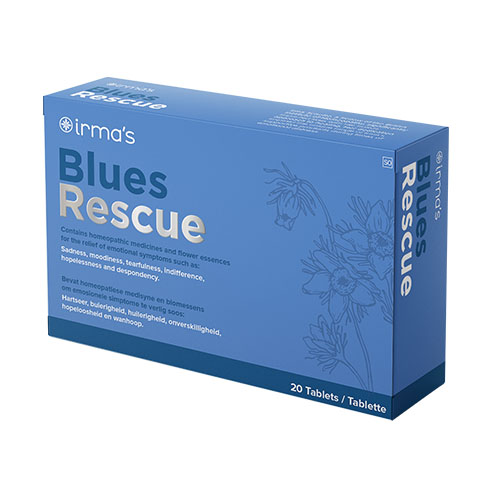 |
Irma’s Blues Rescue: supports children experiencing sadness, moodiness, tearfulness, hopelessness, indifference, or despondency. |
| . | . |
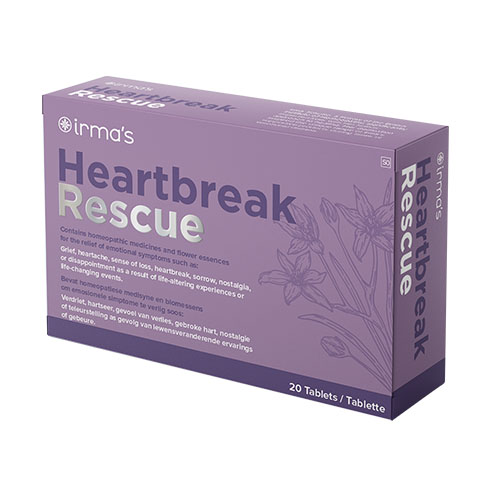 |
Irma’s Heartbreak Rescue: soothes grief, heartache, a sense of loss, sorrow, or disappointment following life-altering or life-changing events a child may experience. |
| . | . |
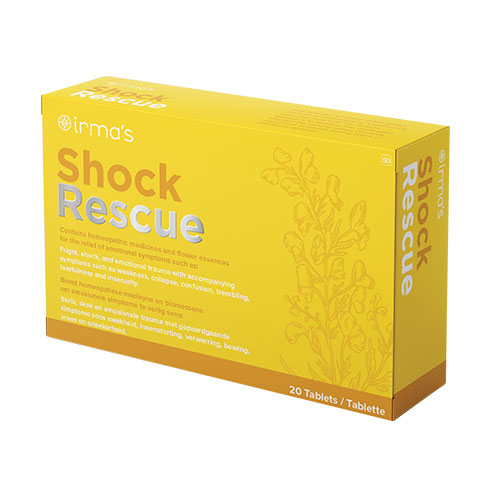 |
Irma’s Shock Rescue: designed for moments of sudden emotional or physical shock, offering fast, gentle support in the immediate aftermath of a frightening or traumatic event. |
| . | . |
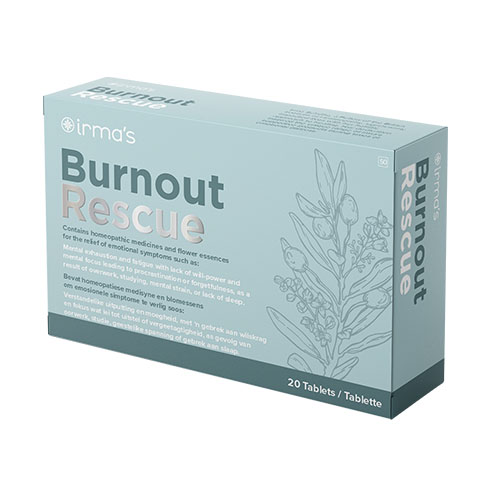 |
Irma’s Burnout Rescue: relieves mental exhaustion and fatigue, along with lack of focus, procrastination, or forgetfulness resulting from overwork, studying, or mental strain, common in children facing heavy academic loads. |
| . | . |
Bio-Strath
Bio-Strath is a 100% natural, Swiss-made herbal yeast supplement with 61 essential nutrients that support a child’s energy, reduce fatigue, and aid recovery from a busy day’s demands.
 |
Bio-Strath boosts absorption of zinc, magnesium, iron, and B vitamins, nutrients vital for immune strength, restful sleep, and nervous system function. Bio-Strath supports concentration and helps children cope better with stress and fatigue. Bio-Strath is available in tablet or syrup form and can be given three times daily during periods of increased stress. |
| . | . |
Healing childhood stress and trauma naturally starts with awareness, consistency, and gentle tools that empower the child and their family. With the right support, every child can find their way back to calm.
References
- UNICEF (2023) How to recognize signs of distress in children. Available at: https://www.unicef.org/parenting/child-care/how-to-recognize-signs-of-distress
- Georgetown University Center for Children and Families (2022) Research update: Children’s anxiety and depression on the rise. Available at: https://ccf.georgetown.edu/2022/03/24/research-update-childrens-anxiety-and-depression-on-the-rise/
- Pedagogy Education (n.d.) Holmes & Rahe Non-Adult Stress Scale. Available at: https://pedagogyeducation.com/Resources/General/Holmes-Rahe-Non-Adult-Stress-Scale
- Stanford University (2022) ‘Research shows mindful breathing can help kids find calm’, Mindful.org. Available at: https://www.mindful.org/research-shows-mindful-breathing-can-help-kids-find-calm/
- Moderate-to-vigorous physical activity and reactivity to acute psychosocial stress in preadolescent children’, Journal of Science and Medicine in Sport. Available at: https://www.sciencedaily.com/releases/2023/09/230905124926.htm
- LifeLab Kids (2025) Reasons to select art as therapy: goals & benefits. Available at: https://www.lifelabkids.org/blogs/reasons-to-select-art-as-therapy-goals-benefits/