



Most of us rest a bit, ice the injury, take some painkillers, and then get back to training. That works well for certain injuries but can make others worse. The twisted ankle needs completely different treatment than the knee pain that’s been building gradually over months of training.
Understanding the type of injury you’re dealing with determines your recovery timeline and when you can safely return to activity. Get it right, and you bounce back stronger. Get it wrong, and a minor niggle becomes a chronic problem that keeps you on the sideline for months.
Let’s break down the two main types of injuries you’re likely to encounter, and what each one means for your recovery.
Acute traumatic injuries
Acute traumatic injuries announce themselves. One moment you’re fine, the next you’re not. A collision sends you flying, your ankle rolls on an uneven surface, or a tackle catches you wrong. These injuries happen fast and hurt immediately.
Sprains occur when your ligaments get stretched too far or tear completely. Your ankle twists awkwardly and you feel sharp pain, watch swelling develop, and struggle to put weight on it. Sprained wrists are common, too, especially when you throw out your hand to break a fall.
Dislocations are unmistakable. When bones separate at a joint, the joint looks misshapen, and you can’t move it. The pain is intense and immediate. You need medical attention straight away.
Fractures range from hairline cracks to complete breaks. Direct impact or excessive force snaps the bone. You’ll know something serious has happened because the pain is severe, swelling comes fast, and you can’t use that limb. Even hairline fractures need medical assessment.
Ligament tears like ACL injuries are particularly common in football, rugby, and netball. You may hear a pop at the moment of injury, followed by your joint giving way. These injuries may need surgical repair and months of rehabilitation before you can return to sport.
Concussions can be very serious. Any impact to the head that causes headache, dizziness, confusion, or nausea needs immediate medical evaluation, no pushing through, no toughing it out.
Contact sports carry the highest risk for these acute injuries. Rugby, football, hockey, and boxing put you in situations where sudden impacts are part of the game.
Chronic overuse injuries
Chronic overuse injuries creep up on you. They’re the quiet troublemakers that start as a niggle you can ignore. A slight twinge in your Achilles after your run. A bit of knee discomfort when you’re climbing stairs. Most people brush these early warnings aside and keep training.
The problem is, what begins as mild discomfort has a way of escalating. Gradually, that niggle becomes persistent pain. Eventually, it’s the kind of problem that forces you to stop completely.
Achilles tendonitis affects the tendon connecting your calf to your heel. Runners, jumpers, and tennis players experience pain and stiffness, particularly in the morning. Patellar tendonitis or “runner’s knee” causes pain below the kneecap during jumping or kneeling activities. Lateral epicondylitis or “tennis elbow” creates pain on the outside of the elbow that worsens with wrist movements. Stress fractures are tiny cracks in bones from repetitive impact, common in runners’ feet, shins, and hips.
DOMS (Delayed onset muscle soreness)
DOMS is not technically an injury. DOMS is that dull aching pain appearing 24-72 hours after you’ve pushed yourself hard or tried something new. Your muscles adapt quickly. The same workout probably won’t cause the same soreness next time.
Immediate care for acute injuries
The RICE method is a framework for immediate response after acute injuries.
- Rest the injured area immediately.
- Ice for 15-20 minutes every 2-3 hours. Wrap the ice pack in a cloth. Don’t put it directly on your skin.
- Compress with an elastic bandage to limit swelling.
- Elevate above heart level to help fluid drain from the injury.
Seek medical attention for severe pain, visible deformity, inability to bear weight, or symptoms that don’t improve within 48 hours.

Professional treatment for overuse injuries
Rest and RICE might be enough for acute injuries, but overuse injuries need a different approach. Simply resting isn’t going to fix the underlying problem that allowed the injury to develop in the first place. You will need professional help.
- Chiropractic care works particularly well when joint dysfunction is part of your injury. If your body’s compensating for poor movement in one area, maybe your hips are tight, so your knees take the strain. A chiropractor can help restore balance and get everything moving properly again.
- Dry needling targets stubborn muscle knots that won’t release on their own. A practitioner inserts fine needles into the tight spots to help release tension, improve blood flow, and restore normal muscle function. It’s especially useful when specific muscles are holding you back from recovering fully.
- Physiotherapy gets to the heart of why you’re injured. A physio will assess how you’re moving, identify weak areas that need strengthening, and spot flexibility issues you might not have noticed. They’ll create an exercise programme specifically designed for your injury and your goals, not just generic stretches, but movements that address your particular problem.
- You’ll need a rehabilitation programme to guide you through the stages of recovery. Start with exercises that restore range of motion, then build stability, and finally prepare you for the specific demands of your sport or activity. Rushing through these stages is tempting, but patience pays off with a more complete recovery.
- A biokineticist is a healthcare professional who uses movement analysis to pinpoint exactly where your body isn’t functioning at its best. They can create conditioning and recovery programs to help prevent the same injury from happening again when you return to full training.
Training habits that prevent injury
Chronic overuse injuries can be prevented by good exercise habits. Warm up properly before every session. Cool down and stretch afterwards. Build up your training slowly. Jumping from 5km runs to 15km overnight, or suddenly doubling your gym sessions, is a recipe for injury.
Listen to your body. Persistent pain is a warning signal, not something to push through. Proper technique protects you from unnecessary stress on joints and tissues.
Natural remedies to support healing
Alongside professional treatment and good training habits, natural remedies can give your body extra support during recovery.
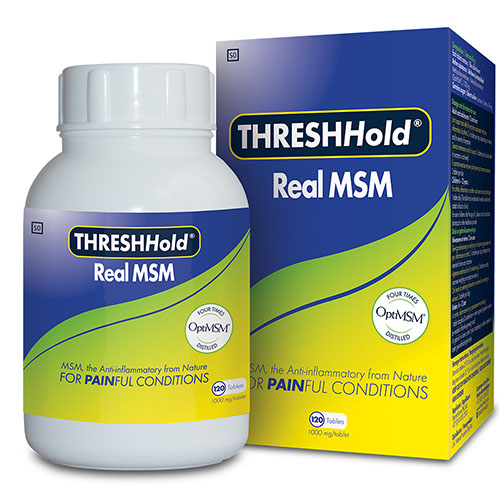
THRESHHold Real MSM (Methylsulfonylmethane) is a form of organic sulphur, the third most abundant mineral in the human body and a key component of our connective tissues. Sulphur is an important nutrient for the maintenance of your joints, tendons, ligaments and cartilage. OptiMSM is a 4 times heat-distilled, 99.9% pure MSM with the lowest water and impurity content. OptiMSM is the only MSM with an FDA GRAS safety rating. MSM is not on the WADA prohibited list for sport.
 |
THRESHHold Real MSM tablets provide systemic support for recovery from exercise and reduce post-exercise muscle soreness and joint pain. Each THRESHHold Real MSM tablet contains 1000mg OptiMSM. Take 3 tablets per day to promote exercise recovery. For general maintenance and support, take 2 tablets daily. THRESHHold Real MSM is non-allergenic, Kosher and Halal certified, non-GMO, gluten-free, allergen-free, non-shellfish-derived and classified vegan. |
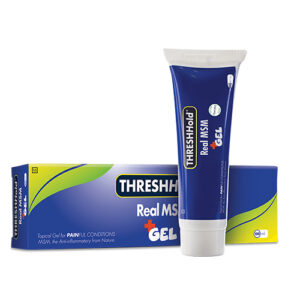 |
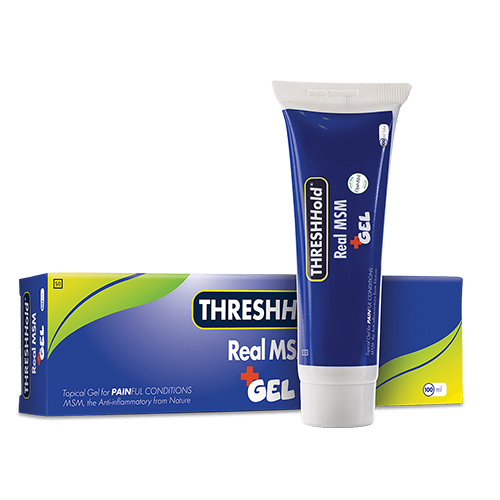
THRESHHold Real MSM Gel is a topical gel that provides temporary relief of pain, swelling, redness, discomfort and reduced mobility of soft tissue and joints. Apply 2-3 times daily. |
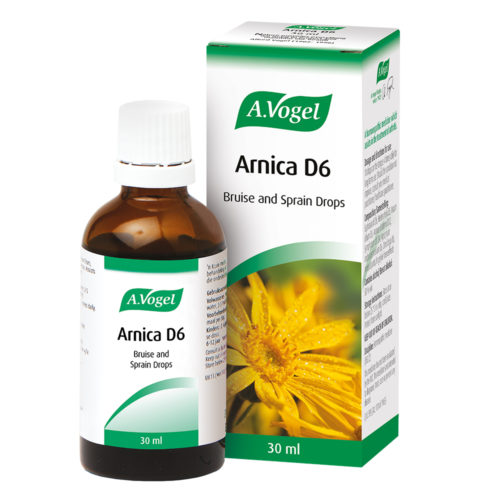 |
A.Vogel Arnica D6 is a homoeopathic remedy for bruising, swelling, and muscle soreness, particularly useful after acute injuries. Adults and children over 12 years can take 10 drops, 4 times daily, 15 minutes before meals. Discontinue once improvement occurs. |
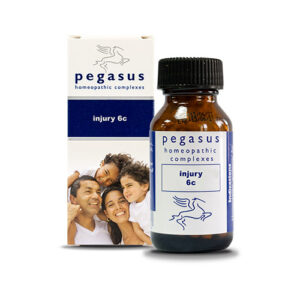 |
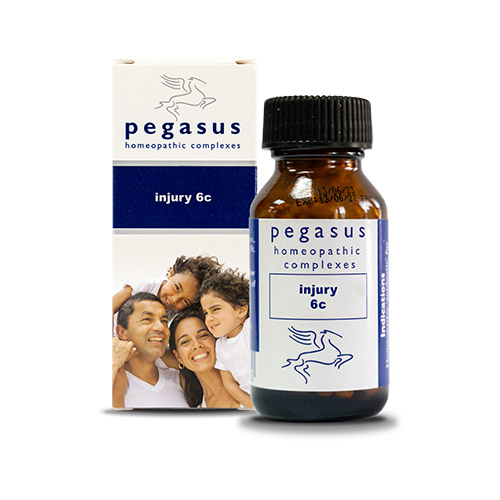
Pegasus Injury 6c is a homeopathic complex used for the treatment of muscle strain, twisted ankles, bumps, bruises, bleeding, jarred backs or concussion. Pegasus Injury heals at a physiological level and deals with the shock that accompanies an accident. One dose is 3-5 pillules sucked under the tongue in a clean mouth. In acute cases, dose every half hour for 3 doses, then every hour for 3 doses. Continue dosing every 4 hours until relief is obtained, then 3 times a day until completely resolved. |
Getting back to activity safely
Healing is not a race. Trying to dive straight back into full training before your body’s ready sets you up for another injury. Work with your healthcare professional and stick to their advice about when and how to return to training.
When you do get moving again, start slow and light. Keep sessions short. If anything starts hurting, back off. Pain means your body’s not ready yet. Remember, recovery isn’t just about your muscles. You need to feel confident in your body again.
Injuries are a setback, not the end. With the right care, you’ll get back to what you love, stronger than before.
References and additional reading:
- Louw, M. (2023) 5 key things to speed up injury recovery, Sports Injury Physio. Available at: https://www.sports-injury-physio.com/post/how-to-speed-up-recovery-from-injury
- Name et al. (2025) The athlete’s road to recovery: Preventing and treating sports-related orthopaedic injuries – dr. Peter Smith: Orthopaedic surgeon, Dr. Peter Smith | Orthopaedic Surgeon. Available at: https://orthosurgeon.co.za/the-athletes-road-to-recovery-preventing-treating-sports-related-orthopaedic-injuries/
- Recovery strategies for sports injuries: Best practices (2025) Austin Orthopedic Institute. Available at: https://austinoi.com/blog/recovery-strategies-for-sports-injuries-best-practices/
- Ryan van Wyk and Evan Knight (2025) The role of a biokineticist, Sports Science Institute of South Africa. Available at: https://www.ssisa.com/ssisa-pulse/the-role-of-a-biokineticist
- What are the most common sports injuries? (2025) Cleveland Clinic. Available at: https://my.clevelandclinic.org/health/diseases/22093-sports-injuries
- What causes tendonitis? (2025) Cleveland Clinic. Available at: https://my.clevelandclinic.org/health/diseases/10919-tendonitis
- Wpoceans (no date) Sports injury clinic, The Role of Chiropractic Care in Sports Injury Recovery. Available at: https://kpmed.co.za/the-role-of-chiropractic-care-in-sports-injury-recovery.html