



In this article we answer the following questions:
- Why do women run low on iron more easily than men?
- How do periods affect a woman’s iron levels?
- Does a woman need more iron during pregnancy?
- What does iron do in your body?
- When should a woman see a healthcare professional about low iron?
Who needs iron most?
Teenage years: Puberty takes a lot out of a young girl’s body. Her growing body needs iron to make extra blood and build muscle. When a young girl starts her menstrual cycle, it uses some of that iron each month. A diet that was adequate before her period started may no longer be enough.
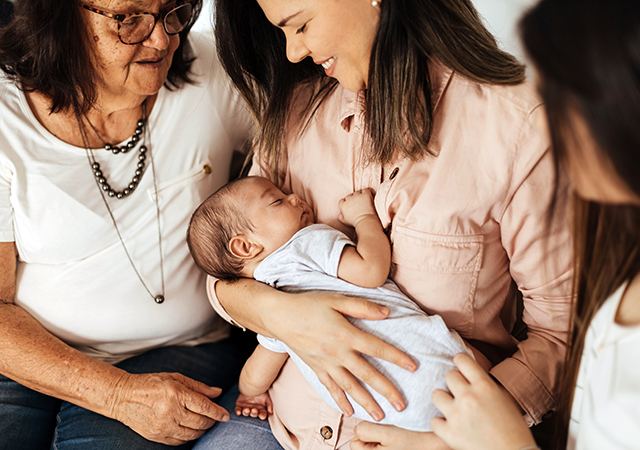
Pregnancy: During pregnancy, your body needs the most iron. Extra blood, a growing placenta and a developing baby all draw on your iron supply. Your iron level shapes the start of your baby’s first 1 000 days, the period from conception to their second birthday, when the brain, body and immune system take shape.
Read more about it in our guide to the first 1000 days.
Teenage mothers are still growing, so they need iron for their own bodies as well as their babies. Carrying twins, or having pregnancies close together, requires extra iron to prevent levels from being depleted by demanding pregnancies.
Postpartum: Pregnancy and birth draw heavily on your iron, and many mothers leave hospital with their stores depleted. Breastfeeding continues to draw on your energy while your body is healing. The first months after your baby is born are a time to rebuild, and it is important to give your body the support it needs.
Heavy periods: Heavy periods are common and have many causes. These include conditions like PMOS, fibroids, endometriosis, adenomyosis and inherited bleeding disorders. Many women live with heavy periods for years because they assume it is normal, and all that time their iron stores are being drained.
Surgery and other bleeding. An operation can take a large amount of blood, and the iron it carries, in one go, so your reserves can take time to recover. Blood loss from illness is often harder to spot. Slow bleeding in the gut, caused by conditions like ulcers or the long-term use of anti-inflammatory painkillers, can drain your iron for months before it’s linked to the symptoms.

What does iron do in your body?
Iron’s main job is helping you make red blood cells. It is a key part of haemoglobin, the protein inside red blood cells that carries oxygen from your lungs to every part of your body.
Without enough iron, your body makes fewer red blood cells, or ones that carry less oxygen. That is why low iron leaves you feeling drained. Iron stores oxygen in your muscles, helps your cells make energy, and supports your immune system and brain.
What happens when my iron is low?
- Constant tiredness or weakness
- Poor concentration or “brain fog”
- Dizziness, breathlessness or a racing heart
- Paler skin
- Thinning hair or brittle nails
- Restless legs
- Low mood or irritability
- Catching infections more often
When iron stays low and your body cannot make enough healthy red blood cells, it is called iron-deficiency anaemia.
Haem and non-haem iron
Haem iron, found in meat, poultry, and fish, is absorbed at rates of 15-35%. Your body recognises it easily and absorbs it readily.
Non-haem iron from plants, vegetables, and fortified foods is absorbed at lower rates than haem iron. It’s also more finicky. Calcium from dairy products, tea, coffee, and certain plant compounds can reduce how much your body actually absorbs.
To absorb more iron, eat iron-rich foods with vitamin C from peppers, tomatoes, citrus fruit, guava or berries. Enjoy tea and coffee between meals rather than with them. Soaking, sprouting and fermenting beans and grains helps with iron absorption.
Natural support for your iron levels
 |
When your iron needs are highest, your body needs extra support. Bio-Strath is a natural, Swiss-made supplement that provides 61 of the 100 vital nutrients your body needs each day, in a highly absorbable form. Using Bio-Strath alone has been shown to help support healthy haemoglobin levels throughout pregnancy, a time when haemoglobin usually declines. Bio-Strath is also proven to enhance iron absorption by 5 times. |
| . | . |
 |
Bio-Strath Iron with Vitamin C combines the original Bio-Strath formulation with fermented Koji and vitamin C. Fermented Koji is a slow-release, bioavailable iron source that is gentle on your system and suitable for a plant-based diet. The vitamin C comes from acerola, a tropical fruit native to Central and South America and the Caribbean, renowned for its exceptionally high vitamin C content. When you take iron and vitamin C together, you absorb more iron. |
When to ask for support
From your first period to life after menopause, iron does the same work for your body. What changes is how much you need. The symptoms of low iron, including constant tiredness, breathlessness or thinning hair, are easy to put down to a busy life, but they must be taken seriously.
If you have heavy periods, bleeding that worries you, or tiredness that will not lift, speak to your healthcare professional. A simple blood test will tell you if your iron is low. With the right food and support, you can start to feel like yourself again.
References and additional reading:
- Columbia Doctors (2024) Iron deficiency is a huge problem for girls. Available at: https://www.columbiadoctors.org/news/iron-deficiency-huge-problem-girls
- Cleveland Clinic (2023) Iron-deficiency anemia: symptoms, causes and treatment. Available at: https://my.clevelandclinic.org/health/diseases/22824-iron-deficiency-anemia
- Great Ormond Street Hospital (n.d.) Anaemia. Available at: https://www.gosh.nhs.uk/conditions-and-treatments/general-medical-conditions/anaemia/
- Leeds Teaching Hospitals NHS Trust (2026) Iron intake in pregnancy and beyond. Available at: https://www.leedsth.nhs.uk/patients/resources/iron-intake-in-pregnancy-and-beyond/
- Milton Keynes University Hospital NHS Foundation Trust (2025) Anaemia. Available at: https://www.mkuh.nhs.uk/patient-information-leaflet/anaemia
- National Health Service (2020) Pregnancy vitamins and supplements. Available at: https://www.nhs.uk/pregnancy/keeping-well/pregnancy-vitamins-and-supplements/
- Office on Women’s Health (2025) Iron-deficiency anemia. Available at: https://womenshealth.gov/a-z-topics/iron-deficiency-anemia
- University of California, Davis (n.d.) Nutrition and health info sheet: iron. Available at: https://nutrition.ucdavis.edu/sites/g/files/dgvnsk426/files/content/infosheets/factsheets/fact-pro-iron.pdf
- Engelhart-Jentzsch, K., Schlöffel, I. and Winter, S. (2018) ‘Plasmolysed herbal yeast (Strath®) improves micronutrient bioavailability: an in vitro study using Caco-2 intestinal epithelial cells’, AgroFOOD Industry Hi Tech, 29(2). Available at: https://www.researchgate.net/publication/325360703_Plasmolysed_herbal_yeast_StrathR_improves_micronutrient_bioavailability_An_in_vitro_study_using_Caco-2_intestinal_epithelial_cells
- Engelhart-Jentzsch, K., I. Schlöffel, and S. Winter, Plasmolysed herbal yeast (Strath®) improves micronutrient bioavailability – An in vitro study using Caco-2 intestinal epithelial cells. AgroFOOD Industry Hi Tech, 2018. 29(2).
- Leffler, L., T. Leffler, and P. Joller, Hemoglobin values during pregnancy – observation on the effect of the herbal yeast preparation Bio-Strath® on the hemoglobin level of pregnant women. Schweizerische Zschr. GanzheitsMedizin, 2000. 12(6): p. 327-328.