







In this article we answer the following questions:
- How does your workspace affect your mental health?
- What are healthy work boundaries for remote and office workers?
- How should you set up an ergonomic workspace?
- Why does decluttering your workspace improve focus?
- How can plants improve mental health in the workplace?
How your workspace affects your mental health
The connection between work environments and mental well-being is stronger than you may think. Environmental factors like poor air quality, noise, and uncomfortable temperatures can make you feel anxious, frustrated, and sad. These negative emotions directly affect your ability to do your work well. Open-plan offices can be particularly challenging, increasing both our stress levels and negative feelings, even after just a few hours.
A supportive environment helps you feel more focused, calm, and balanced throughout your day. The reality is that most workspaces weren’t designed with mental well-being as a priority, especially with the shift to hybrid and flexible working.
Set healthy work boundaries
One of the most important steps in protecting your mental health is establishing clear physical and mental boundaries.
At home, create a dedicated work zone. Working from bed or the couch might feel comfortable at first, but it blurs the line between rest and work. It becomes harder to switch off at the end of the day. Try to choose a specific area for work and stick to it. This helps your brain know when it’s time to focus and when it’s time to relax.
In the office, boundaries look different, but they’re just as important. In shared or open-plan spaces, it helps to communicate openly with your colleagues about what helps you work well. This might mean letting them know when you need uninterrupted time to focus, or being honest about what you need to feel comfortable and productive. Wear headphones when you need to concentrate or take quiet breaks when you feel overwhelmed.
Technology boundaries are also vital. Turn off work notifications after hours or keep work apps off your personal phone to help you step away properly.
Create a comfortable workspace
The physical setup of your workspace directly affects both your body and mind. Here’s what to consider:
- Seating and desk height: Choose comfortable, supportive seating and ensure your desk height allows your arms to rest at roughly 90 degrees when typing, without hunching your shoulders.
- Screen positioning: Your monitor should be around an arm’s length away, with the top of the screen at or slightly below eye level.
- Lighting: Natural light helps lift your mood and keeps your energy steady throughout the day. Try to set up your workspace near a window if possible.
- Noise levels: Excessive noise contributes to stress and makes it harder to concentrate. If your space is noisy, noise-cancelling headphones can help, or try soft furnishings and materials that absorb sound.
- Temperature comfort: Spaces that are too hot or too cold can add to your stress levels. At home, use a fan or heater to keep your workspace at a comfortable temperature. In the office, layer your clothing or keep a small desk fan nearby to help you stay comfortable.
These adjustments might seem small, but they can make a real difference in reducing the physical discomfort that builds up and adds to your stress throughout the day
Declutter for mental clarity
Clutter makes it harder for you to focus. Too much visual stimulation in your workspace makes it harder for your brain to concentrate. A tidy space helps you think more clearly and come up with better solutions when solving problems.
Keeping your workspace tidy and visually calm helps improve your focus and gives you a greater sense of control during busy or stressful days. This applies to digital clutter, too. Regularly clearing your email inbox and desktop files can reduce mental load and make it easier to find what you need when you need it.
Bring nature indoors
Adding plants to your workspace offers genuine psychological benefits. Simply being around plants can lower blood pressure, reduce anxiety, and create a sense of calm. People working in offices with plants report feeling better overall, concentrating more easily, and being more productive than people in plant-free spaces.
Even one or two low-maintenance plants can make your space feel more alive and peaceful, reminding your brain to relax while you work. If you are working from home and have pets, make sure your indoor plants are safe for animals.
Personalise your space
Your workspace shouldn’t feel cold or impersonal. Add personal touches like a favourite photo, a meaningful object, or colours that lift your spirits to boost your mood and how you feel about your work. The key is finding balance. Make your workspace personal enough to feel like yours, but not so busy that it becomes overwhelming or pulls your attention away from your tasks.

Make time for movement and breaks
Even the best-designed workspace can’t replace the need for regular movement. Stepping away from your desk throughout the day is important for your physical and mental health. Take short breaks to stretch, walk and look away from your screen. Moments of rest help reset your focus and reduce the cumulative stress that builds during long work periods.
Set yourself up for success
It’s important to be prepared for life’s little emergencies. Knowing you have the supplies you need on hand can help to preserve your mental health during the busy working day. Here’s what we recommend keeping in on hand:
 |
Healthy snacks like nuts, seeds and popcorn. |
 |
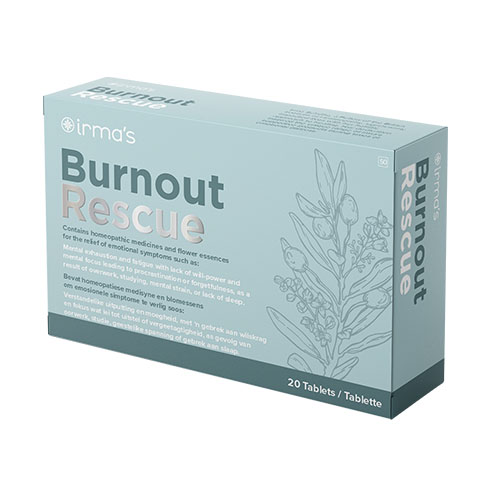
Irma’s Rescue Burnout, Panic and Stress formulas for when the working day threatens to overwhelm you. |
 |
Drop of Eden Tea Tree Oil. Tea tree oil is nature’s antiseptic, antibacterial, antifungal, antiviral and anti-inflammatory. Keep it on hand to clean your desk and to soothe minor skin irritation and scrapes. |
 |
If you work in a open plan office, you’re at risk of picking up illnesses that your colleagues bring to work with them. A.Vogel Echinaforce supports your immune system and helps to keep nasty office bugs at bay. |
 |
A.Vogel Echinaforce Sore Throat Spray is a multitasking powerhouse that combines the antibacterial, anti-viral, anti-inflammatory and immune modulatory action of Echinaforce with the antimicrobial, anti-inflammatory and astringent properties of fresh Salvia officinalis (common sage). Keep Sore Throat Spray on hand to reduce sore throat symptoms and to protect against colds and flu. |
 |
Bio-Strath is a 100% natural supplement that supports your memory and concentration, energy and immunity. For busy professionals, Bio-Strath provides essential support for the working day. |
Creating a workspace that supports your mental health doesn’t require a complete overhaul or a perfect setup. Even small changes like better lighting, clearer boundaries, or a more organised desk can help reduce your stress and improve focus. When you pay attention to how your work environment makes you feel, you can create a space that supports productivity and protects your wellbeing, wherever and however you work.
References and additional reading:
- BeOffices (2025) How Your Workspace Affects Mental Health. Available at: https://www.beoffices.com/how-your-workspace-affects-mental-health
- FM Business Daily (2025) Today’s office design does not support mental wellbeing for the modern workforce, 10 November. Available at: https://news.fmbusinessdaily.com/2025/11/todays-office-design-does-not-support-mental-wellbeing-for-the-modern-workforce/
- Candor Therapy Network (2025) How to Set Healthy Boundaries When You Work From Home, 4 August. Available at: https://www.candortherapynetwork.com/blog/workfromhome
- Embodied Wellness & Recovery (2025) Boundary-Setting for Remote Work: Neuroscience-Backed Tips to Reclaim Work-Life Balance at Home, 16 July. Available at: https://www.embodiedwellnessandrecovery.com/blog/boundary-setting-for-remote-work-neuroscience-backed-tips-to-reclaim-work-life-balance-at-home
- LinkedIn (2024) Workplace design can enhance mental health, 22 April. Available at: https://www.linkedin.com/pulse/workplace-design-choices-can-enhance-mental-health-heres-corley-hq9fc
- FlowerAura (2025) How Greenery Improves Mental Well-being, 2 October. Available at: https://www.floweraura.com/blog/how-greenery-improves-mental-well-being
- World Economic Forum (2025) Study: The effect of open-plan offices on our mental health, 2 June. Available at: https://www.weforum.org/stories/2021/07/open-plan-office-noise-stress-mental-health-mood-work-employment-employees-welfare/
- Plant Solutions (2024) The psychological benefits of plants in the workplace, 2 September. Available at: https://plantsolutions.com/psychological-benefits-of-plants-in-the-workplace
- Workplace Strategies for Mental Health (2026) Setting healthy boundaries at work, 7 January. Available at: https://www.workplacestrategiesformentalhealth.com/resources/setting-healthy-boundaries-at-work
- Psico-Smart (2025) What are the Psychological Effects of Decluttering on Workplace, 28 February. Available at: https://blogs.psico-smart.com/blog-what-are-the-psychological-effects-of-decluttering-on-workplace-produc-185595
- Posturite (2025) A step-by-step guide to an ergonomic monitor setup, 23 June. Available at: https://www.posturite.co.uk/blog/a-step-by-step-guide-to-an-ergonomic-monitor-setup