







In this article we answer the following questions:
- What is colour theory and why does it matter in the home?
- How do different colours influence mood?
- Why is natural sunlight important in how we experience colour?
- How can colour contribute to wellbeing at home?
- What are simple ways to add more colour to a neutral space?
Look outside your window right now. Even if you’re in the middle of the city, nature is showing off. A hadeda perches on a streetlight, its wings catching the light in flashes of green, bronze and violet. A dandelion pushes up through a crack in the pavement, bright yellow against the grey. Beyond the buildings, gardens and parks spill over with green foliage, butterflies, birds and flowers in every shade.
When you spend time in nature, your shoulders drop, your breathing slows, and your mind feels lighter. After spending time in nature, you feel calmer, happier and renewed.
If we feel at peace in nature’s brilliant hues, why do we choose to live in shades of beige, grey and white?
The rise of neutral homes
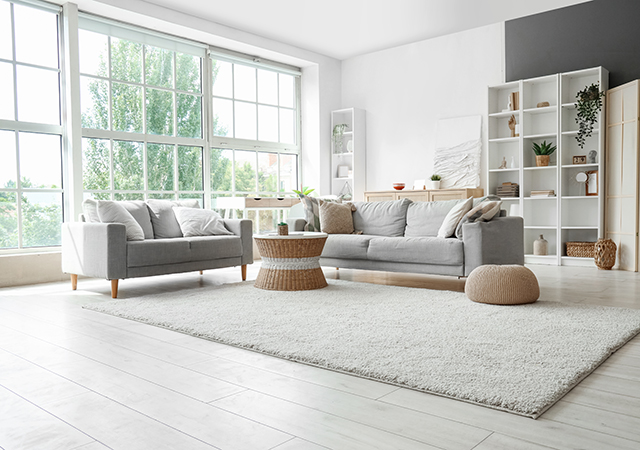
Neutral interiors have earned their popularity. Beige, grey and white make rooms look larger and brighter. Neutral interiors photograph well and look polished in social media videos. Estate agents advise people to keep their home decor neutral so future buyers can imagine themselves in the home more easily.
Many people choose neutral decor in reaction to the louder décor of 80s and 90s childhood homes, often full of bold colours. Neutrals do have a place in a home. Calm, however, can come with colour, and a neutral palette works best as a backdrop rather than the whole picture.
Colour theory made simple
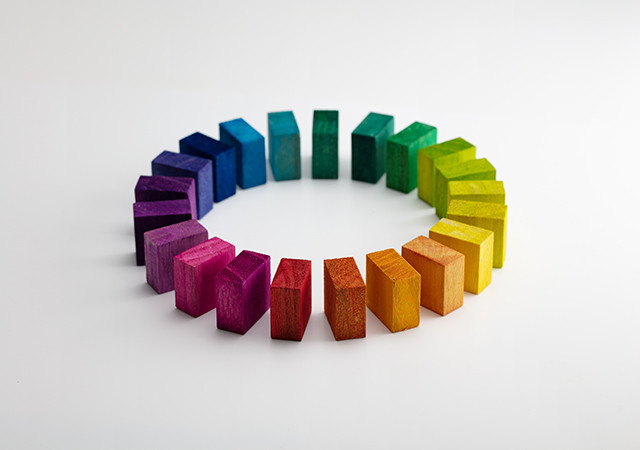
Colour theory is the study of how colours relate to one another and how we respond to them. Picture the colour wheel. Warm colours, like red, orange and yellow, are on one side. Cool colours, like blue, green and purple, are on the other side.
Warm colours feel energising, sociable and cosy. Cool colours feel calm, fresh and spacious. Three qualities shape the effect: hue (the colour itself), saturation (how vivid it is) and lightness (how pale or deep it is). A soft dusty terracotta wraps a room in warmth. A vivid orange fills the same space with energy.
Colour theory gives us a simple toolkit for home decor. A bedroom decorated in greens and blues feels restful. A playroom with bright, fun orange and yellow patterns encourages creativity.
Colour and mood
Colour sets the mood of a room:
- Blue soothes the mind and clears the head, which suits bedrooms, bathrooms and study corners.
- Green feels fresh and peaceful, like a walk through the park or a quiet corner of the garden.
- Yellow radiates warmth and optimism, and lights up kitchens and dining spaces.
- Orange feels friendly and sociable, adding playful energy to living areas.
- Red stirs energy and passion, so it works best in small doses, like a dining room accent.
- Pink feels soft and gentle, and adds comfort to bedrooms and reading nooks.
- Purple sparks creativity and adds a touch of luxury.
Colour supports wellbeing at home in everyday ways. A sunny yellow cushion can lift a grey morning, a green plant on the windowsill can soften a busy desk, and a deep blue wall can make a bedroom feel like a place to unwind.
Think about how you want to feel in each room, then choose colours that support it. Muted, softer tones soothe. Very bright ones can overwhelm. Small pops of colour add up to a home that feels more personal and more restorative.
The sun: nature’s colour enhancer
Natural light changes a room through the day. A wall that looks soft and fresh at sunrise can become bright at midday and golden by late afternoon. Sunlit colours look richer and more alive than the same shades under artificial bulbs.
Daylight changes how we feel. It helps set our body clocks, which influence mood, energy and sleep. A colourful room that welcomes the sun can lift both the walls and the people living inside them.
In South Africa, north-facing rooms generally receive the most useful direct sunlight, particularly in winter, so they suit rich, saturated shades. Rooms that get less light often glow with warm, soft tones like buttery yellow or peach.
Bringing colour back
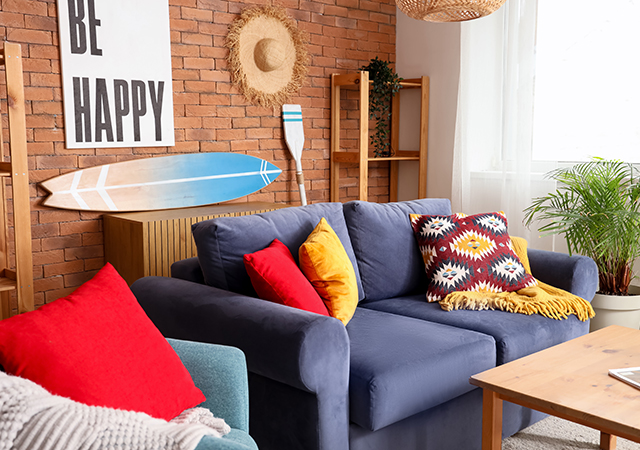
You don’t need to plan a full renovation to bring colour back into your home. Start small and build in layers:
- Artwork: Hang one bold piece, then echo its shades around the room.
- Textiles: Add cushions, a throw, a rug or fresh curtains.
- Décor: Try colourful ceramics, books or a bright statement chair.
Letting nature in
Nature has given us a stunning colour palette. Invite it back into your home. Potted plants and trailing greenery add living green. A vase of garden flowers adds fresh colour that changes through the year. Natural materials like wood, cane, linen and stone add warm, earthy texture.
Place plants near a bright window, where daylight shows off the green of their leaves. Even one pot on a windowsill makes a room feel more alive.
Check that every plant is pet-safe before you buy. Popular choices, including monstera, peace lily, pothos and aloe vera, can make cats and dogs ill. Lilies, even in a vase, are incredibly dangerous for cats. Spider plants, calatheas, parlour palms and African violets are pet-friendly alternatives. If you are unsure about a plant, play it safe and ask your vet.
Come home to colour
Picture coming home at the end of a long day. Late sunshine spills across the room, lighting a golden cushion, a leafy plant on the windowsill and a painting that glows on the wall. When your home is a true sanctuary, your mind starts to unwind as soon as you enter.
Open the curtains, add a little colour and let the light do the rest. Living naturally means living colourfully, too.
References and additional reading:
- Britannica (2026) ‘Colour: the visible spectrum’, Encyclopaedia Britannica, 16 May. Available at: https://www.britannica.com/science/color/The-visible-spectrum
- Clemson Cooperative Extension Home & Garden Information Center (2025) Pet-safe indoor houseplants: what’s safe for cats and dogs, 21 July. Available at: https://hgic.clemson.edu/pet-safe-indoor-houseplants-whats-safe-for-cats-and-dogs/
- homeinteriorz (2026) Why are house interiors always painted beige, 20 July. Available at: https://homeinteriorz.com/why-are-house-interiors-always-painted-beige.html
- Interior Design Institute (n.d.) The power of colour in design: psychology and inspiring ideas. Available at: https://www.theinteriordesigninstitute.com/za/en/blog-power-of-color-psychology-in-design
- Interlet (2026) From beige to bold: why the 2020s are bringing colour back home, 28 January. Available at: https://www.interlet.com/blog/from-beige-to-bold-why-the-2020s-are-bringing-colour-back-home
- Pantone (2025) How do we see color? Available at: https://www.pantone.com/articles/color-fundamentals/how-do-we-see-color
- Peterson, D. (2026) ‘Is your pet safe? Common houseplants that could be poisoning your pet’, Southern Courier, 24 March. Available at: https://www.citizen.co.za/southern-courier/news-headlines/local-news/2026/03/24/is-your-garden-safe-jspca-warns-of-poisonous-plants/
- Remplanner (2025) Where did all the color go? The rise of neutral interiors, 30 June. Available at: https://remplanner.com/journal/where_did_all_the_color_go_the_rise_of_neutral_interiors/
- Stories Flooring (2025) Home as a sensory landscape: how footfall texture, sound, light and material create emotional comfort, 27 November. Available at: https://storiesflooring.co.uk/blogs/stories/39938486-5dca-4cfc-b869-4d3f3f5c86dc-home-as-a-sensory-landscape-how-footfall-texture-sound-light-material-create-emotional-comfort
- Verywell Mind (n.d.) How color psychology affects moods, feelings, and behaviors. Available at: https://www.verywellmind.com/color-psychology-2795824
- Windows Are Us (n.d.) How can natural light window design transform your home’s aesthetics and improve your well-being? Available at: https://www.windows-are-us.co.uk/how-can-natural-light-window-design-transform-your-homes-aesthetics-and-improve-your-well-being/